
04 · Unified Integration
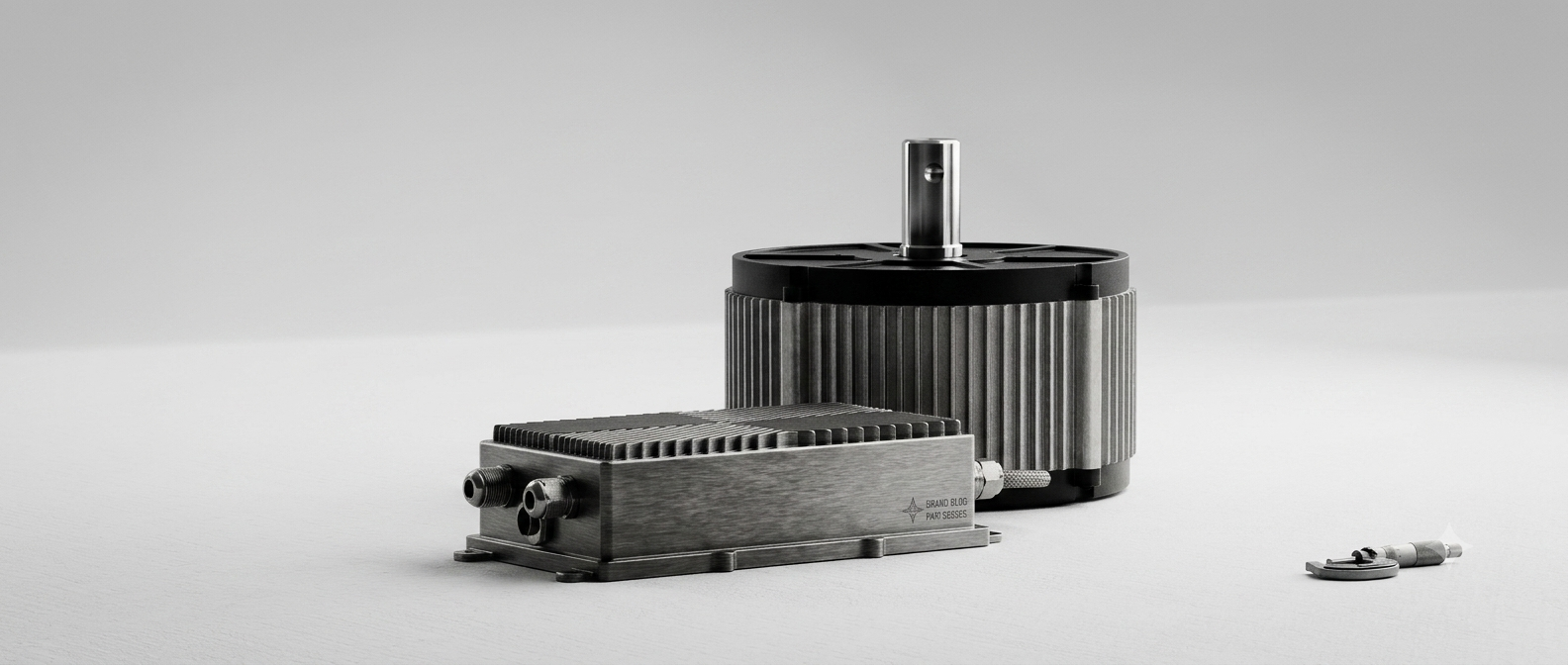
Motor + Controller Kit (Jointly Calibrated)
Factory-integrated dynamic hardware and software calibration[cite: 15]. The direct-drive Permanent Magnet Synchronous Motor (PMSM) rotor topology is fully optimized for light weight based on high-strength 6061 aluminum alloy, significantly reducing rotational inertia while easily withstanding high dynamic load shocks of 4000 rpm / 100 Nm[cite: 15].
Simulated Stress Load Limit Verification
4000 rpm / 100 Nm
Dynamic load impact test passed
Rotational Inertia Reduction
-35%
PMSM
6061 Aviation Aluminum Rotor
Deep structural weight reduction
FOC
Factory Joint Calibration
Unified HW/SW tuning
SDK
Open API Interfaces
CAN / UART protocols
| Motor | Specifications |
|---|---|
| Motor Type | PMSM Inner Rotor Permanent Magnet Synchronous Motor |
| Motor Diameter | 200 mm |
| Motor Length (Excl. Shaft) | 170 mm |
| Rotor Material | 6061-T6 Aviation Aluminum, Topology Optimized Weight Reduction |
| Operating Voltage | 200 V – 400 V DC |
| Rated Speed | 2000 – 4000 rpm |
| KV Value | 9 |
| Peak Torque | 80 Nm (Dynamic Impact) |
| Peak Power | 40 kW |
| Max Efficiency | >91% (Paired with HDF-400-100 ESC) |
| Cooling Method | Air Cooling / Liquid Cooling (Optional) |
| Integrated Sensors | Integrated Temperature & Hall Sensors |
| Motor Weight | 6500 g |
| Matched ESC | Factory FOC Jointly Calibrated ESC |
| Development Support | Complete SDK + Technical Documentation |
| Package Contents | Motor + ESC + Wiring Harness + Documentation |
| ESC | Specifications |
|---|---|
| ESC Model | HDF-400-100 |
| Control Mode | FOC Torque / Speed / Voltage (Selectable) |
| Operating Voltage | 200 – 450 V DC |
| Continuous Current | 60 A |
| Peak Current | 100 A (10s) |
| Signal Input | 1100 – 1900 µs |
| Communication Interface | UART / RS485 / CAN |
| Ingress Protection | IP67 |
| Dimensions (LxWxH) | 210 x 180 x 54 mm |
| Weight | 1.5 kg |
| Development Support | Complete SDK + Technical Documentation |
| Package Contents | Motor + ESC + Wiring Harness + Documentation |
Kit Advantages
· Eliminates complex motor-ESC matching & tuning cycles
· Pre-calibrated at factory across all operating conditions
· Reduces overall system integration & development costs
· Provides complete SDK to accelerate time-to-market